Product Toolkit · Template + Deck + Example

Your PRD, architected.

Pixel-perfect document and deck templates with embedded guidance on every section, two annotated product cases with inline commentary by the author, and a product concept framing guide — grounded in the Innovation Mode 2.0 methodology.

4 Deliverables
26 Sections
28+ Slide deck
2 Product cases

One-time payment · Lifetime access · Instant download — templates, product cases, and framing guide, yours forever. Also available with 2 months of Ainna.ai Pro at $499.

What's Inside

Four deliverables. One complete toolkit.

Pixel-perfect templates with guidance built into every section, two product cases for a realistic product, and a companion framing guide. Download once, reuse forever — you own what you download.

PRD deck template preview .pptx · editable
DELIVERABLE 01

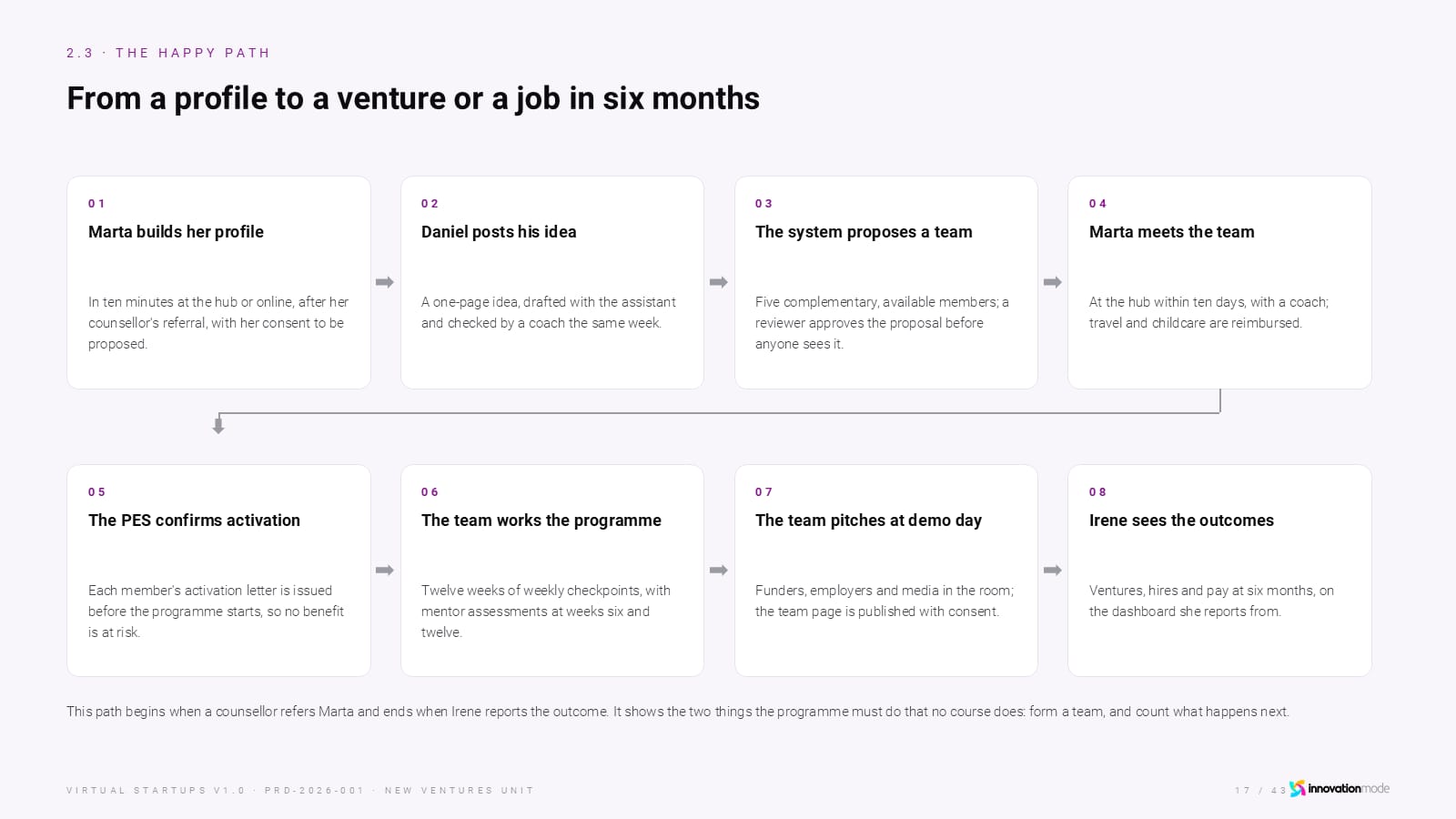
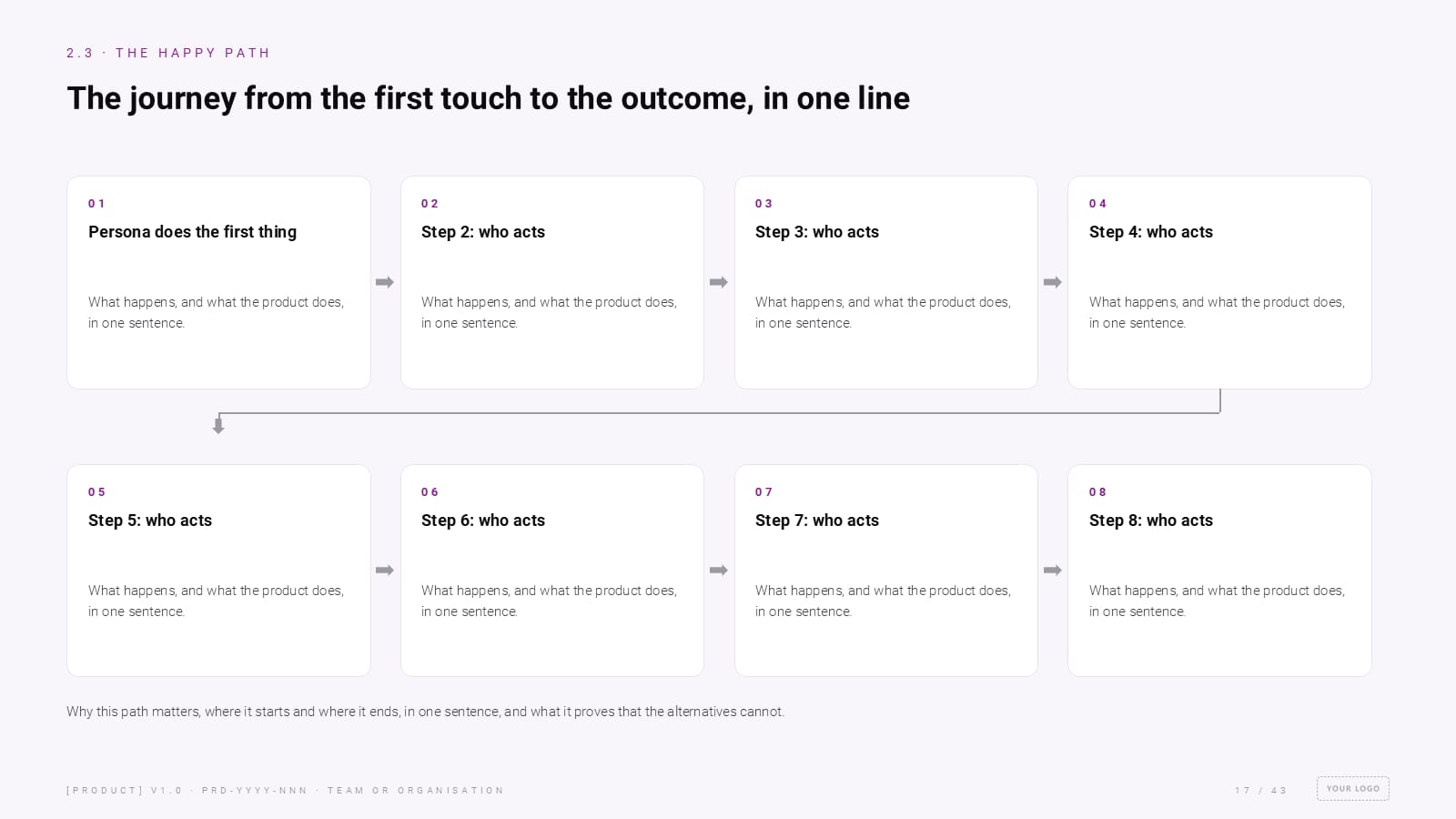
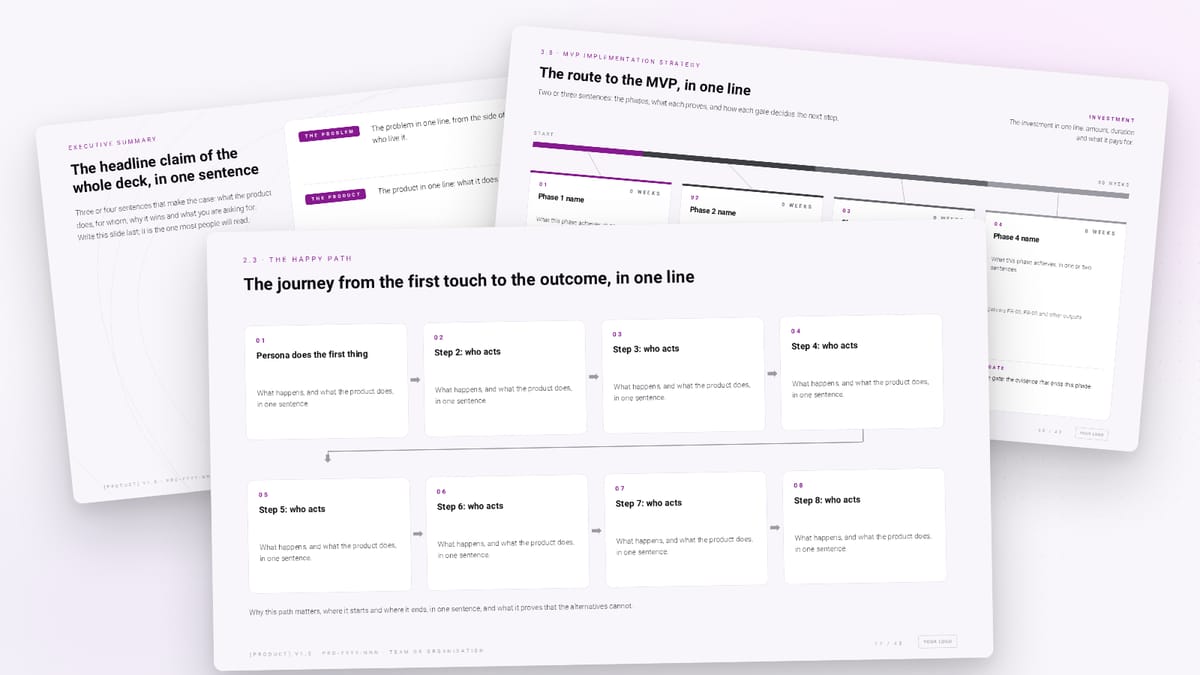
The PRD deck template

A pixel-perfect, ready-to-populate PowerPoint template with embedded instructions on every slide and speaker-notes guidance. Fully editable, reusable across every product you ever ship — yours to own.

28+ slides Embedded guidance Yours to own
PRD document template preview .docx · editable
DELIVERABLE 02

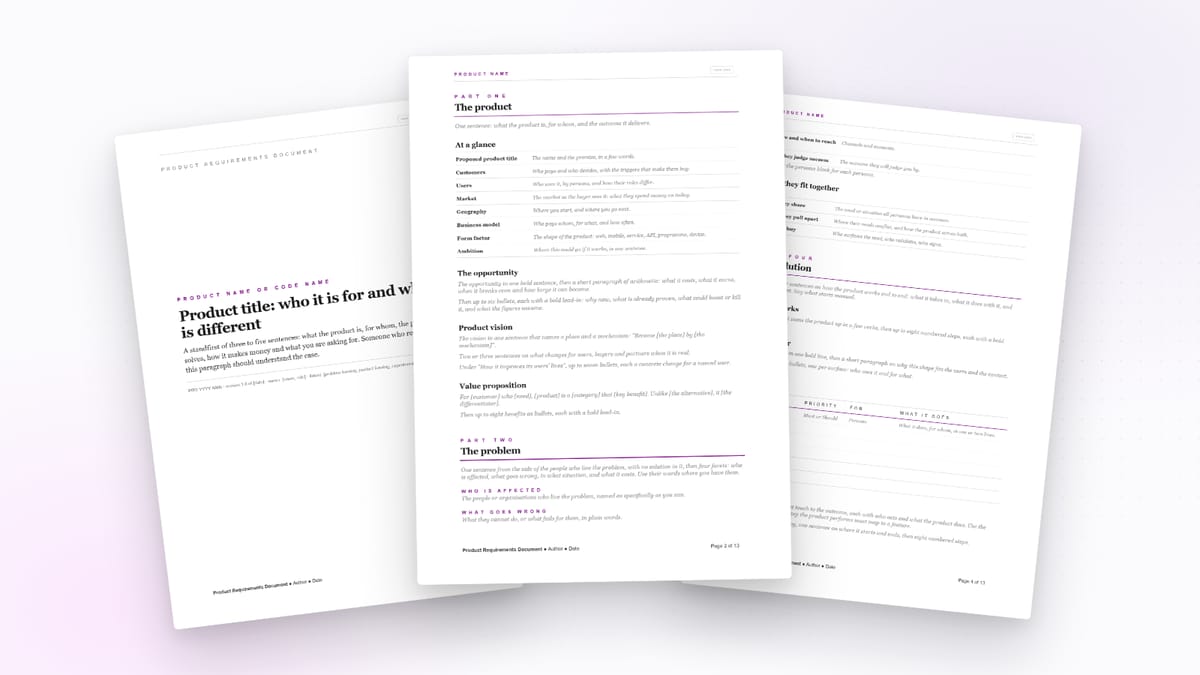
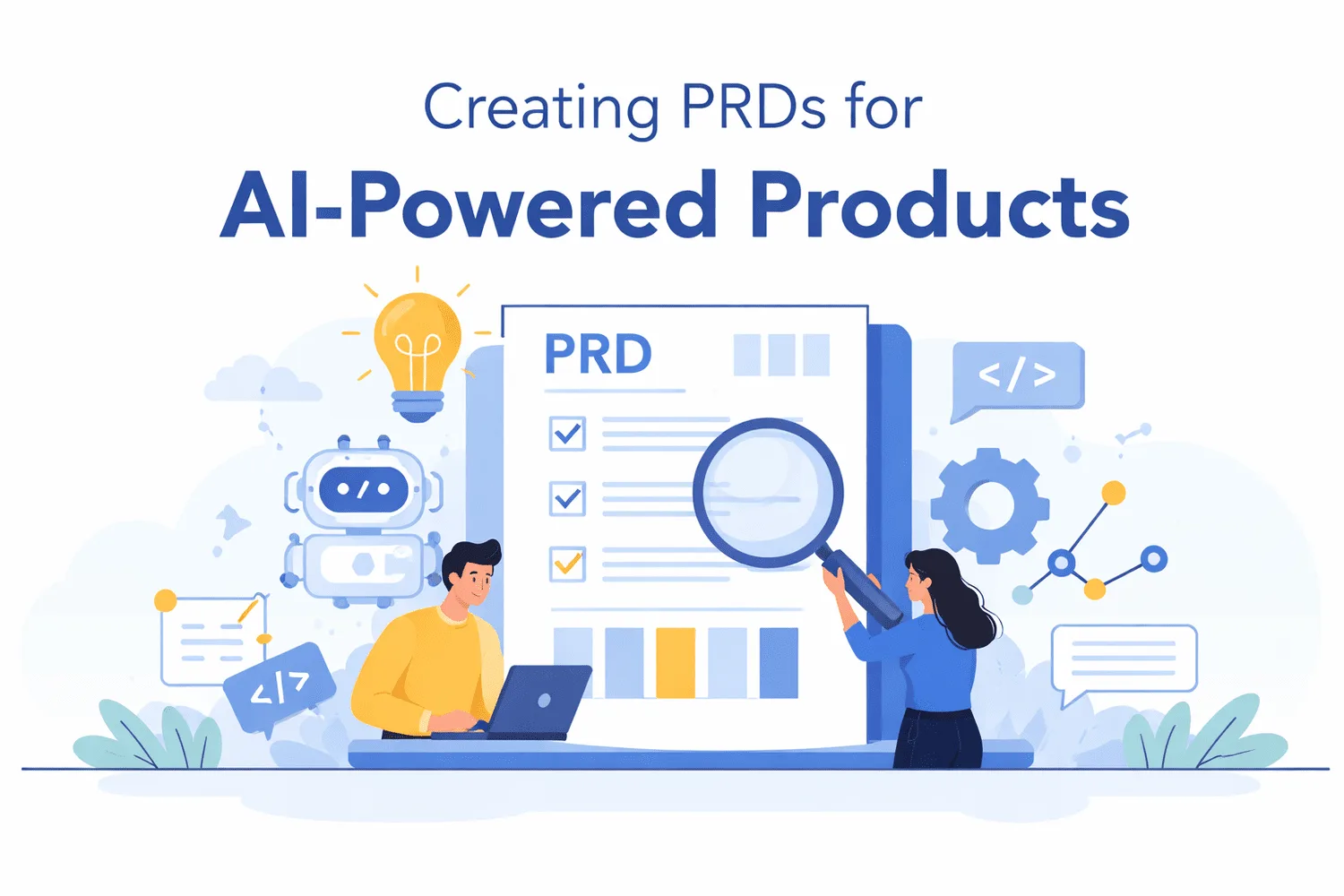
The PRD document template

A pixel-perfect Word template with embedded instructions on every section — headings, prompts, and structural guidance so you always know what goes where and why. Fully editable, fully yours.

26 sections Embedded guidance Yours to own
Annotated product case preview 2 cases · annotated
DELIVERABLE 03

Two annotated product cases

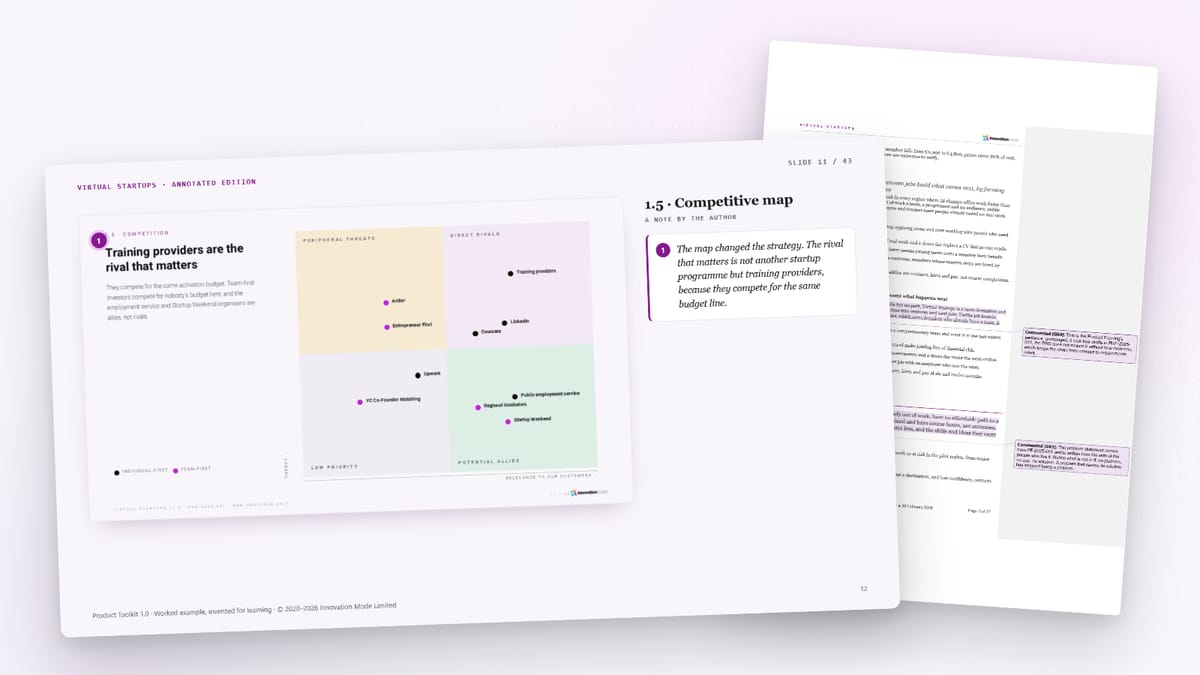
The same product seen through two complementary views — a visual deck for pitching, a long-form document for analytical depth — both filled for Talenture, a realistic hypothetical platform. Each comes with inline commentary from George Krasadakis explaining every framing decision, structural choice, and trade-off. Read the architect's thinking as you study the PRD.

Deck + doc Inline commentary By the author
Product concept framing guide preview E-book · PDF
DELIVERABLE 04

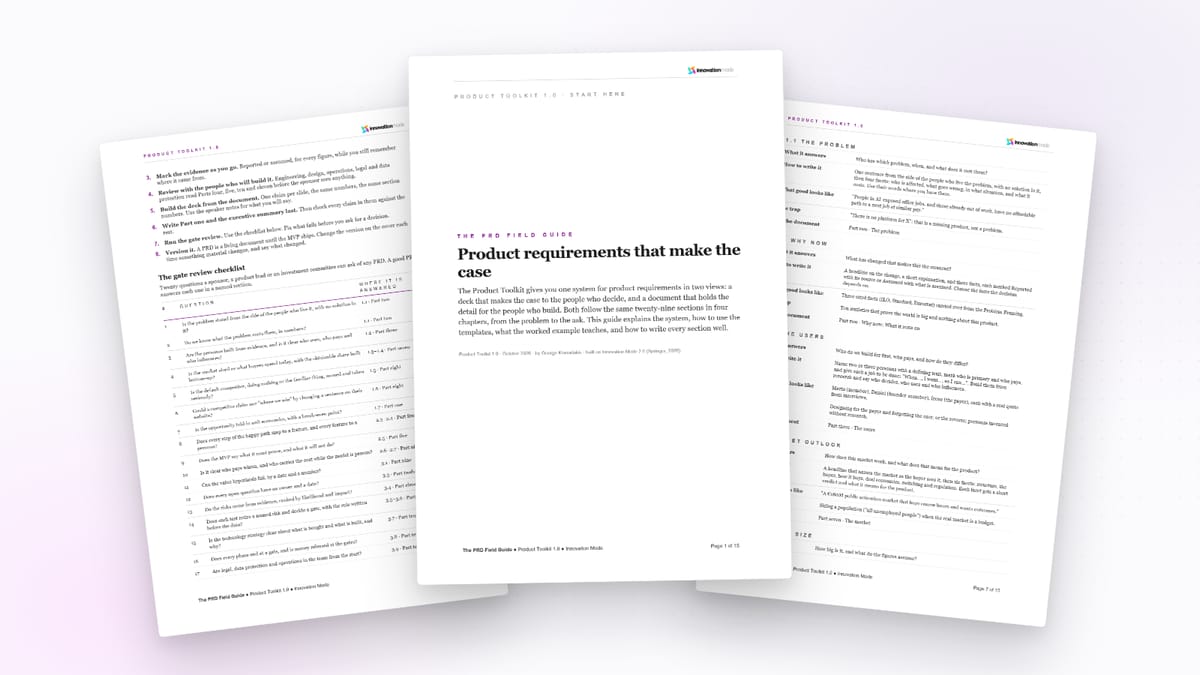
The product concept framing guide

A companion e-book that explains the methodology behind every section — how to frame problems, size markets, shape value propositions, and build a PRD as a system rather than a form. Read once, reference forever.

E-book Methodology Companion read
Only Here

Read over the architect's shoulder.

Every product case comes with inline commentary from George Krasadakis — not just explaining every framing decision, but showing you the framings to avoid, and why. You're not studying a completed PRD. You're watching the architect think.

Annotated problem-insights slide with inline commentary from the architect Problem Insights
George Krasadakis on the right problem

"The headline problem is rarely the one worth solving. Keep asking 'why' — stop when it gets uncomfortable."

George Krasadakis what to avoid

"Don't write 'users want faster results.' That's a theme, not a problem. A real problem has a user, a moment, and a cost — without all three, you're solving nothing."

Sample commentary from the Talenture product cases. Both the deck and the document are fully annotated — every slide, every section.

This kind of reasoning doesn't come from generic AI — it comes from 25 years of product-innovation work. The one exception: Ainna.ai, built on the same methodology.

The Methodology

Your product, section by section.

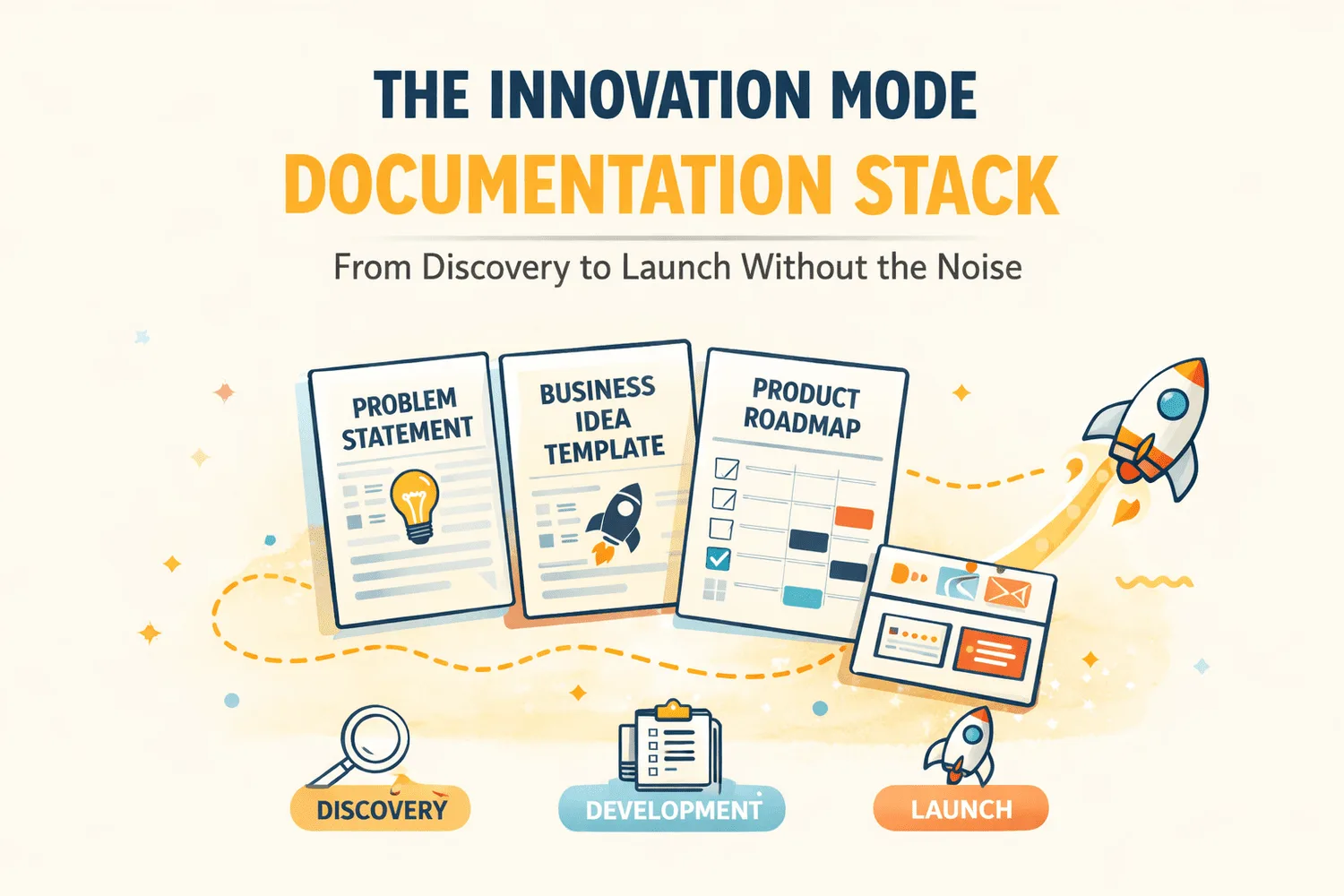
The toolkit is structured around the product lifecycle — from early opportunity discovery through in-market growth — making every critical decision visible, comparable, and easy to defend.

Chapter 01 Discover

Understand the problem, users, market, and competitive terrain. Surface the opportunity worth pursuing.

6 sections
Chapter 02 Define

Shape the product itself — vision, value proposition, happy path, MVP scope, business and revenue models.

6 sections
Chapter 03 Build

De-risk before writing code. Hypotheses, assumptions, risks, experiments, technology, and the MVP team.

8 sections
Chapter 04 Launch

Go to market with intent. GTM strategy, success metrics, growth mechanisms, and the post-MVP roadmap.

6 sections

The 26 sections

Hover a chapter above to see its sections — or hover any section to find its chapter.
Discover01
1.1Problem
1.2Users & stakeholders
1.3Market outlook
1.4Competition
1.5Differentiators
1.6Opportunity
Define02
2.1Product vision
2.2Value proposition
2.3Happy path
2.4MVP features
2.5Business model
2.6Revenue model
Build03
3.1Value hypothesis
3.2Growth hypothesis
3.3Silent assumptions
3.4Risks
3.5Experimentation strategy
3.6Technology
3.7MVP implementation
3.8MVP team
Launch04
4.1Go-to-market strategy
4.2In-market success
4.3Performance measurement
4.4Growth mechanism
4.5Post-MVP roadmap
4.6Innovation & experimentation
The Product Cases

A fully realized PRD — not a hollow template.

You don't get one example. You get two — deliberately different. Same framework. Two markedly different products. The test every toolkit should pass.

10
Epics & features prioritised
10
Named competitors mapped
10
Risks identified & mitigated
8
Personas defined

Numbers per case. Both cases cover every one of the 26 sections end-to-end — and every slide and section is annotated inline by the author.

Built For

The people who make the case — clearly, completely, and fast.

Product Managers

Turn vague ideas into gate-ready PRDs

Walk into any product review with a document and deck that cover every question leadership will ask.

  • Shorten the first-draft cycle from weeks to days
  • Standardize how PRDs look across your org
  • Defend scope with evidence, not opinions
Founders

Build an investor-ready product case

Pair a credible PRD with a visual deck that doesn't look like it came from a free template site.

  • Map market, competition, and moats explicitly
  • Structure hypotheses before you write code
  • Turn the PRD directly into your pitch narrative
Innovation Leads

Make every team's PRD comparable

Give your teams one structure that makes early-stage concepts legible to stakeholders and portfolio reviewers.

  • Replace ad-hoc formats with a shared standard
  • Move faster through innovation gates
  • Make trade-offs visible across the portfolio
Pricing

Two ways to use the system.

Both tiers include the full toolkit — templates, two annotated product cases, and the framing guide — yours to reuse across every product you ever ship. The upper tier adds 2 months of Ainna.ai Pro — live, AI-assisted product development from the same methodology.

The Product Architect's Pack
Templates · Cases · Guide
$ 299
One-time · Instant download · Yours forever
  • PRD deck template — 28+ slides, with guidance .pptx
  • PRD document template — 26 sections, with guidance .docx
  • Two annotated product cases — deck + doc, commented PDF
  • The product concept framing guide (e-book) PDF
  • Lifetime updates as the toolkit evolves
  • Reuse forever across every product you ever ship
Get the Pack →
Grounded in Innovation Mode 2.0 — the methodology behind every template, case, and annotation.
Best value
The Product Architect's Pack, Live
Everything above, plus live AI
$ 499
One-time · Pack yours forever · Ainna Pro 2 months
Everything in the Pack, plus:
  • 2 months of Ainna.ai Pro — the AI innovation agent, built on the same methodology (retail: $198)
  • Up to 20 opportunities — framed, assessed, documented
  • Live PRD & pitch deck generation, branded and editable
  • Market sizing, competitive landscape, persona deep-dives
  • Opportunity scoring by The Judge — AI-driven evaluation
Get the Pack, Live →
The math: Ainna Pro alone is $198 for 2 months. You're essentially getting the toolkit for $301 — or Ainna for free. Whichever way you count it.

Use it forever.

Both tiers come with full commercial reuse rights for your own products, your company's products, your startup, or your team's internal work. No per-seat fees. No expiration. No renewal. The Pack — templates, cases, and framing guide — is yours to use across every product you ever ship.

Consultancy or agency use?

If you plan to use the toolkit as part of paid client deliverables, get in touch — we offer a tailored agency agreement for firms delivering PRDs, pitch decks, or product strategy work to external clients.

Questions

Everything you might be wondering.

What exactly do I receive after purchase?

The Product Architect's Pack ($299) includes four deliverables: (1) a pixel-perfect PowerPoint deck template with embedded guidance on every slide, (2) a pixel-perfect Word document template with embedded guidance on every section, (3) two complete product cases filled for a realistic hypothetical product — doc + deck for each, annotated inline by the author, and (4) a companion e-book on product concept framing. All files download instantly in native editable formats. You own what you download — no subscription, no DRM, reusable across every product you ever ship.

The Product Architect's Pack, Live ($499) includes everything above, plus 2 months of Ainna.ai Pro — the AI innovation agent built on the same methodology. You get an activation code immediately after purchase; it covers 20 opportunities processed through the full framing, assessment, and document-generation pipeline. Retail value: $198.

What's the difference between the Pack and the Pack, Live?

The Pack is the permanent library — templates, cases, guide — that you own forever and reuse across every product. The Pack, Live adds 2 months of Ainna.ai Pro so you can move from studying the methodology to applying it live: framing opportunities, generating PRDs, mapping competitors, running personas, and scoring ideas through The Judge. If you have an active product idea right now, Live is designed for you. If you're buying as a reference library for future work, the standard Pack is enough.

Is the example real and finished — or placeholder text?

Fully finished — and annotated. You get two complete product cases, both filled for Talenture (a realistic hypothetical platform that turns unemployment into startup team formation): a visual deck for pitching and a long-form document for depth. Each covers all 26 sections end-to-end with a €0.9–4.0B TAM analysis, ten named competitors, eight differentiators, a six-part business model, eight priced revenue streams, ten risks with mitigations, twelve experimentation plays, a four-phase MVP roadmap, and a complete go-to-market strategy. And every page carries inline commentary from the author — George Krasadakis explaining each framing decision, structural choice, and trade-off as you read. Nobody else does this.

What methodology is the template based on?

The 4-chapter structure — Discover, Define, Build, Launch — and the 26 sections are drawn from the Innovation Mode 2.0 methodology (Springer, 2026), developed over 20+ years of product innovation work and 20+ AI/ML patents.

Can I use the templates for client or commercial work?

For your own products, startup, or team's internal work — yes, without restrictions. Both tiers include full commercial reuse rights. Reuse the templates across every product you ever build, every pitch you ever give, every venture you ever start. No per-seat fees, no renewal, no expiration.

Consultancy or agency use is a separate arrangement. If you plan to use the toolkit to produce PRDs, pitch decks, or product strategy as paid deliverables for external clients, get in touch — we offer a tailored agency agreement that's structured fairly for firms doing client work at scale.

Do I need specific software to use them?

Microsoft Word or Google Docs for the document; Microsoft PowerPoint or Keynote for the deck. The PDF versions work anywhere for reading and reference.

How is this different from a free PRD template online?

Free templates give you headings. This gives you a coherent system — headings plus guidance plus a visual deck that matches plus a complete product case at the depth of a real product review. It's the difference between a blank page and a reference implementation.

Can I just produce this with ChatGPT or Claude?

You can produce surface-level PRDs quickly — headings filled with generic copy. What generic LLMs can't produce is the framing: the specific calls that say "anchor your TAM to public budgets because you're impact-funded, not end-user revenue" or "sequence your risks by adoption first, not technical." That's 25 years of product-innovation work made portable. The one AI that does generate this quality of reasoning is Ainna.ai — because it's trained on exactly this methodology.

Will I get updates when the toolkit evolves?

Yes, lifetime updates. When the templates are refreshed with new sections, layouts, or examples, you get the new versions at no extra cost.

Do you offer advisory or custom support?

Yes. If you'd like a senior product innovation advisor to work through the toolkit alongside your team, see the Innovation Advisory and AI Strategy Advisory programs — both 8-week structured engagements.

Are there educational or academic licenses?

Yes — universities, business schools, innovation centres, and accelerator programs can license the toolkit for classroom use, coursework, and faculty research. Academic licensing is structured as an annual site license that covers faculty use, student distribution for enrolled cohorts, and integration into course materials.

Individual faculty members and researchers can also inquire about academic-individual pricing. Get in touch with a short note about your institution, program, and intended use, and we'll follow up with options.

Get Started

Stop staring at a blank page — or settling for generic AI noise.

Start your next PRD with pixel-perfect templates, two annotated product cases, and a framing guide grounded in 25 years of product-innovation work.

Part of the Innovation Mode toolkit series — grounded in Innovation Mode 2.0.

Architected and designed by George Krasadakis — AI inventor, 20+ patents, and author of Innovation Mode 2.0 (Springer, 2026).

Educators, universities, and innovation programs — contact us for academic licensing options.