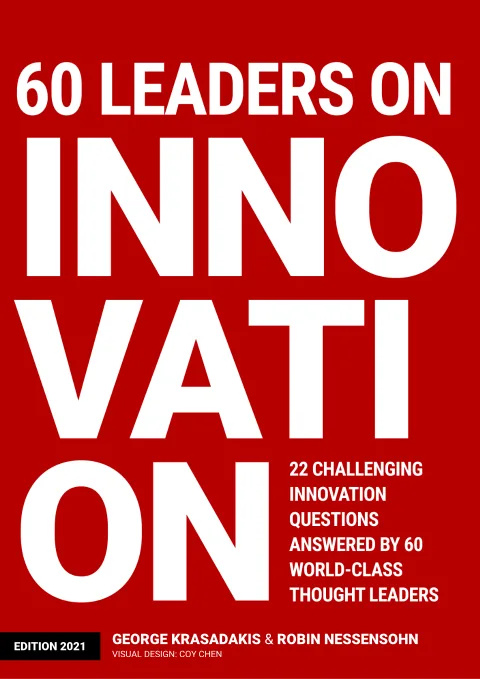
60 Leaders on Innovation (2021 Edition)
Sixty innovation leaders on culture, leadership and corporate innovation, in 22 chapters. The free eBook edited by George Krasadakis and Robin Nessensohn.
Download the PDF
22 questions on corporate innovation — answered by 60 global leaders across industries, geographies, and disciplines. The questions that don't go away.
Most innovation books offer one author's framework. 60 Leaders on Innovation offers sixty viewpoints in conversation with each other — from corporate innovation veterans at Innosight, BCG, IBM, and Microsoft to early-stage investors, public-sector ministers, and scholars who study what actually works.
The book asks 22 questions about innovation culture, methodology, the C-Suite's role, experimentation, digital transformation, and the future of work. Each question is answered by multiple contributors — and they don't all agree. The disagreements are where the value lives.
Produced by George Krasadakis — author of Innovation Mode 2.0 (Springer, 2026), holder of 20+ AI/ML patents, and founder of Ainna.ai — together with Robin Nessensohn. A community-built reference, free forever to read and to share.
60 contributors — operators, advisors, founders, ministers, and academics. Including:
Each chapter pulls together multiple perspectives on a single question — from CEOs who built innovation from scratch to academics who study why most attempts fail.
No chapters in this topic.
It's not about the latest technology. It's about diversity of thought, a discovery mindset, and the ability to act before the window closes. Customer obsession beats process every time.
The most common problem: CINOs are given a microphone with no actual support. A title without authority, budget, and a team is worse than no title at all.
The C-Suite sets the tone. If executives don't model curiosity and reward intelligent failure, nothing else matters — not the budget, not the methodology, not the lab.
Curiosity, customer obsession, comfort with ambiguity, bias toward action. These skills must be distributed across the organization — not locked in an innovation team.
Startups innovate because they'll die if they don't. Their advantage: focus, speed, zero legacy. The challenge most never solve: sustaining innovation through growth.
Stop looking for ideas and start asking for problems. The best opportunities surface through everyday work — not scheduled brainstorming sessions.
Yes — but lightweight and adaptive. Design Thinking, Lean Startup, and Agile provide structure for uncertainty. The trap: rigid process that kills the creativity it was designed to enable.
The specific tools matter less than transparency. The real requirement: a platform where problems, ideas, successes, and failures are visible across the entire organization.
If you're counting "ideas submitted," you're measuring the wrong thing. Track validation velocity, concept-to-MVP cycle time, and revenue from products that didn't exist three years ago.
Decisive. But a "culture of innovation" isn't a poster in the lobby. It's whether your people feel safe enough to experiment, fail intelligently, and try again — without career risk.
Risk aversion, short-term thinking, silos, and the deadliest blocker of all: leadership that says the right things about innovation but never backs it with budget or authority.
Celebrate learning, not just success. Tata gives 'Dare to Try' awards for well-designed experiments that didn't work. That single policy says more than any innovation manifesto.
Communities are the connective tissue. They cross-pollinate ideas, sustain momentum between programs, and keep experimentation alive when formal initiatives end.
Agile provides the delivery cadence; innovation provides the direction. Combining the two without collapsing them into a single process is the organizational design challenge.
Not one that does sprints. One that senses change early, responds without bureaucratic friction, and treats adaptability as an operational capability — not a methodology.
They can — but face constraints the private sector doesn't: regulatory environments, political cycles, and a culture that punishes risk more than it rewards discovery.
Not a technology project. A business transformation enabled by technology. Every company that treats it as an IT initiative fails. To drive real transformation, you must also invest in culture — a theme explored in depth in 60 Leaders on AI.
Sourcing ideas beyond your walls — through partnerships, ecosystems, and communities. It works when trust and IP frameworks are clear. It fails when it's treated as outsourced R&D.
You get what you track. Having a system to secure rights to inventions invariably leads to more inventions — and retains the key innovators who create them.
AI, blockchain, quantum computing. But the technology matters less than an organization's ability to identify and exploit its applications. Tools that operationalize discovery are now the differentiator.
Climate, health, inequality — these demand innovation at a scale and speed the private sector alone cannot deliver. Most of our problems are predictable and pre-solvable — if we become anticipatory.
286 pages of corporate-innovation thinking from 60 global leaders. No paywall. No registration. Just the PDF.
This is an independent project — not an Innovation Mode initiative. George Krasadakis conceived and led it in 2021. The sixty contributors took part on their own, as individual thought leaders, not representing their companies, with no affiliation to Innovation Mode. This is one of many copies in circulation. Readers are welcome to share.
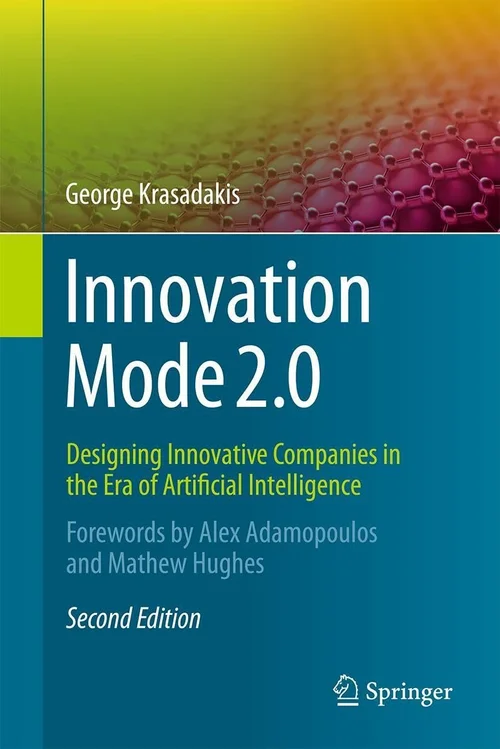
The executive operating manual. 70+ interventions, 6 Innovation Deficits diagnostic, 7-level Maturity Index. Springer, 2026.
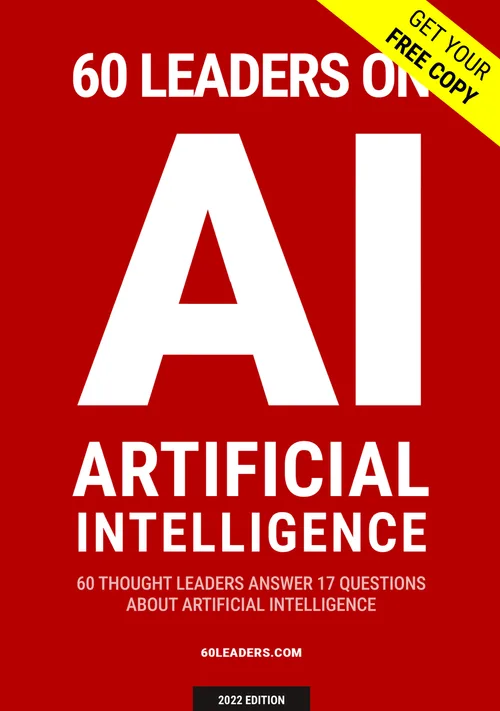
The companion volume. 17 questions on artificial intelligence answered by 60 global leaders. 240+ pages. Free.
60+ definitions covering AI strategy, design thinking, the Innovation Maturity Index, and the working vocabulary of innovation practitioners.
The single most important success factor of corporate innovation is a vivid environment characterized by ‘diversity of thought’ and a special ‘discovery mode’.
— George Krasadakis, from the PrefaceTwo 8-week advisory programs for executive teams. Innovation Advisory rebuilds the innovation function. AI Strategy Advisory turns AI ambition into a sequenced roadmap.
Both programs are built on the frameworks of Innovation Mode 2.0 (Springer, 2026). Or explore Ainna.ai — the autonomous innovation agent that operationalizes those frameworks for product teams.
Sixty innovation leaders on culture, leadership and corporate innovation, in 22 chapters. The free eBook edited by George Krasadakis and Robin Nessensohn.
Download the PDF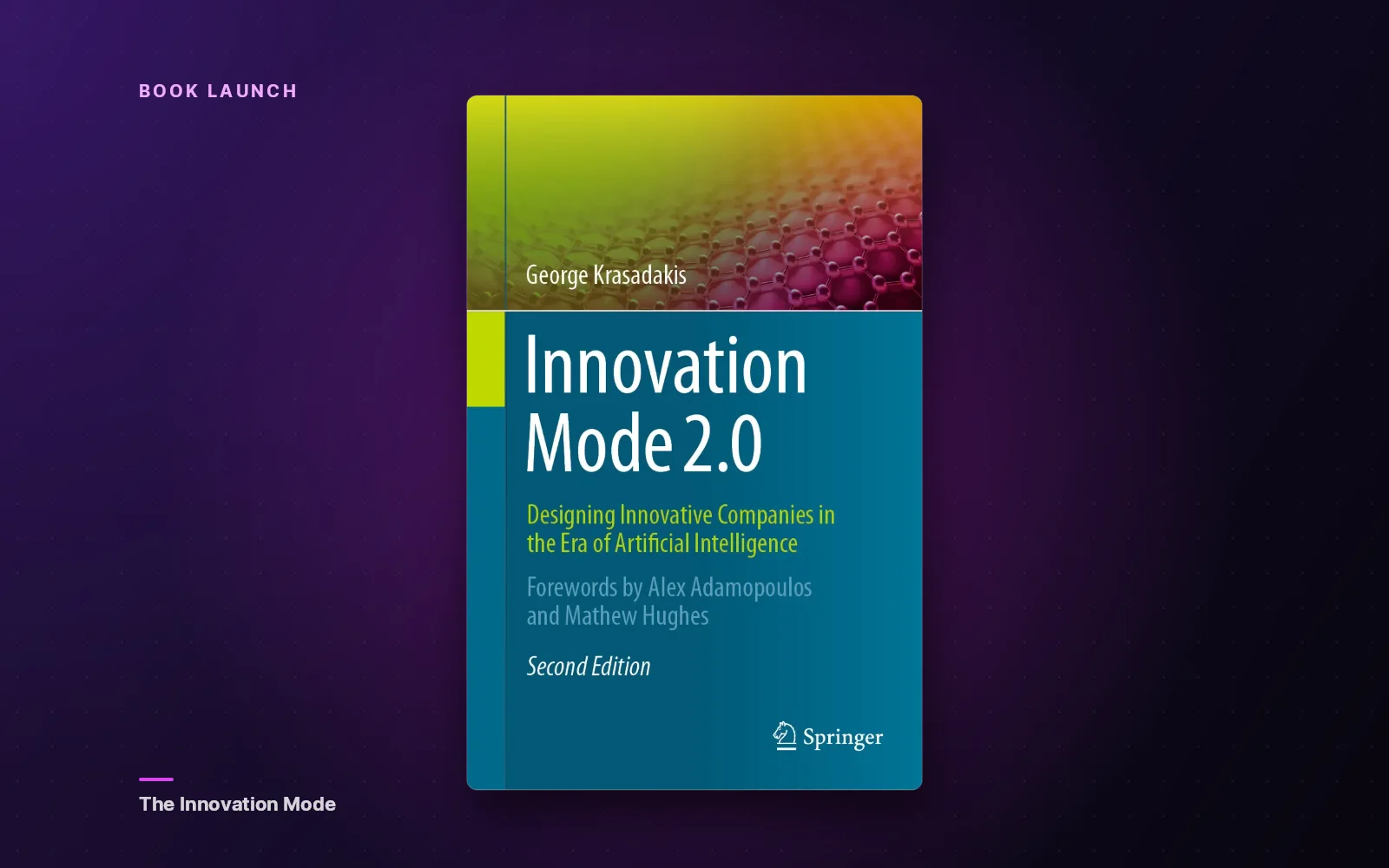
Book launch announcement: Innovation Mode 2.0 by George Krasadakis (Springer, January 2026) delivers the first comprehensive architecture for corporate innovation in the agentic AI era, where AI can generate ideas, build prototypes, and shape strategies in minutes. The book introduces a diagnostic framework of six innovation deficits, a seven-level Innovation Maturity Index, and 70+ interventions for building AI-powered innovation engines. Backed by 25 years at Microsoft, Accenture, and GSK, 20+ AI patents, and a working autonomous innovation agent (Ainna.ai), this is implementation, not theory.

The technologies shaping 2026 (agentic AI, humanoid robots, quantum computing, brain-computer interfaces, AI for science, and climate tech) are no longer emerging; they're converging. For innovation leaders, this demands a fundamental shift: when AI commoditizes ideation, the scarce capabilities become opportunity discovery, rapid validation, and execution speed. Innovation is no longer a competitive advantage; it's a survival trait.
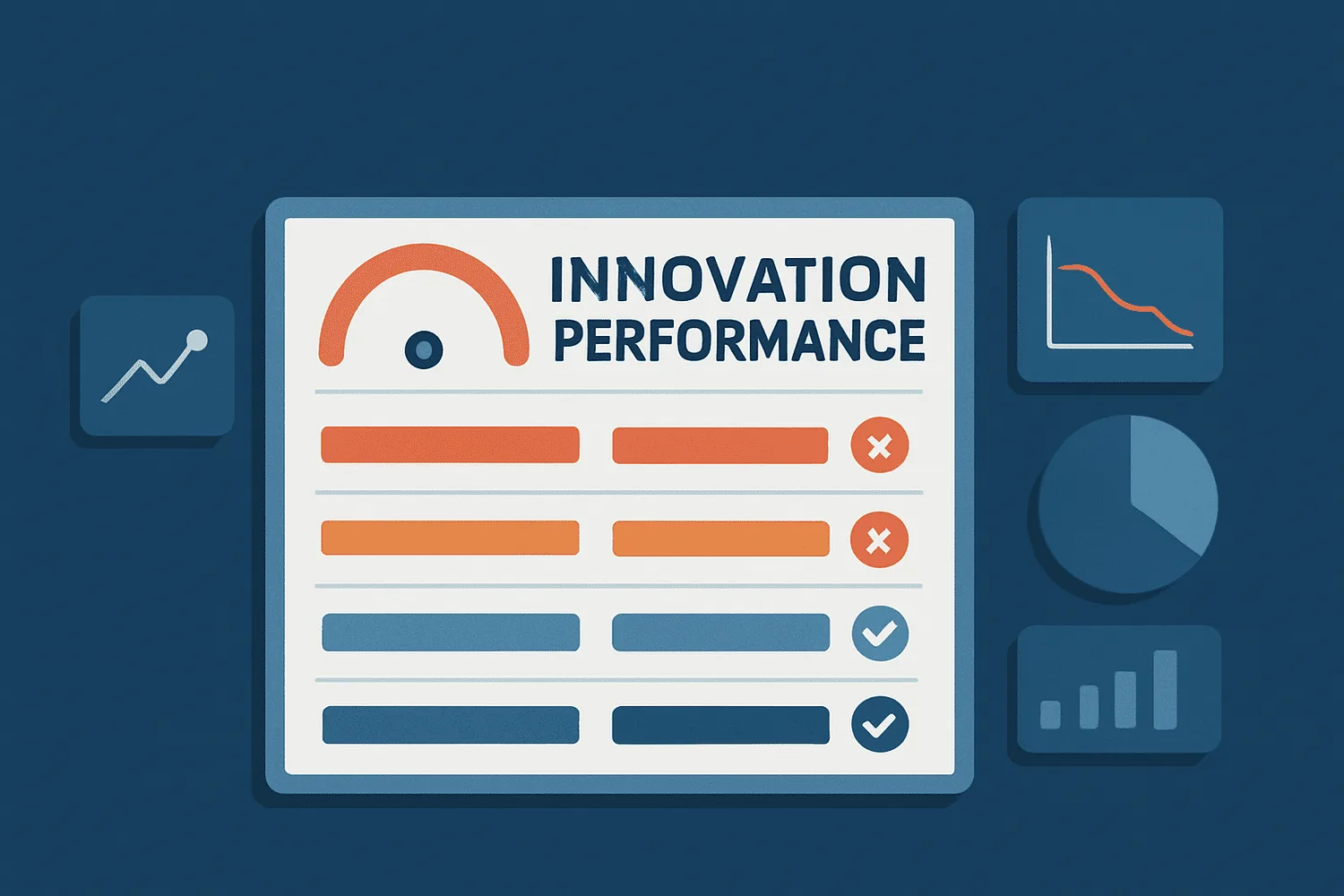
Discover the six hidden deficits - from leadership to venture building - that cause corporate innovation to fail. Learn how to break through structural, cultural, and capability barriers to drive meaningful innovation.