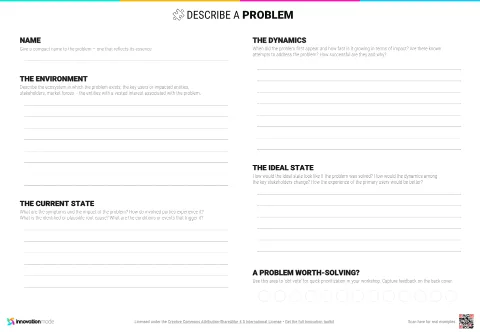
Problem Statement Template (A4 Workshop Sheet)
A printable A4 sheet for framing a problem worth solving in a workshop: current state, impact, root cause and dot voting. CC BY-SA 4.0.
Download the PDF
A structured one-page framework for defining business problems before jumping to solutions. Clarify the challenge, align your team, and focus innovation resources on the problems that matter most.
Free PDF · Perpetual licence on the editable toolkit · Free for students
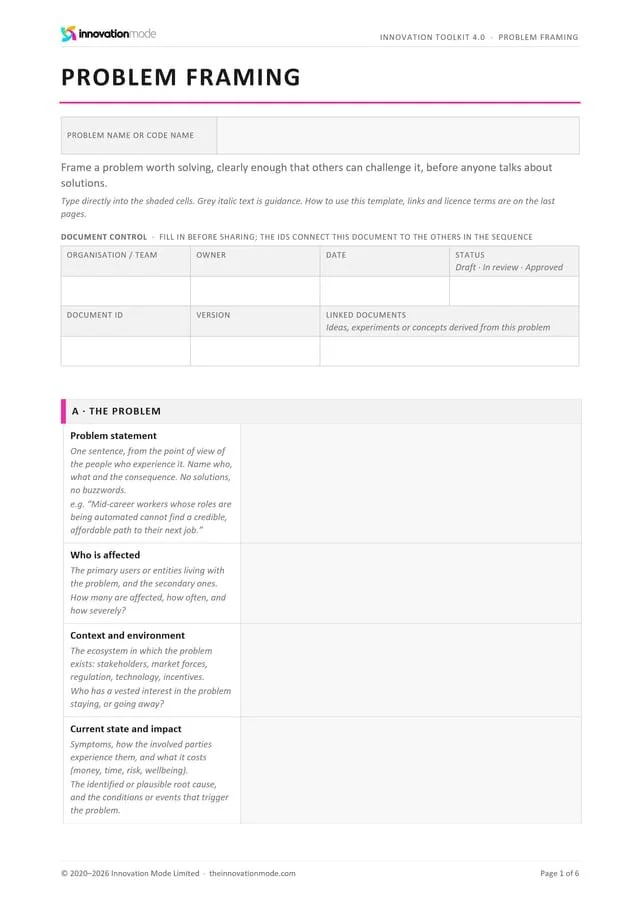
A problem statement is a structured, one-page document that defines a business challenge before any solution is proposed. It captures who is affected, what the symptoms and root causes are, how the problem has evolved over time, and what success would look like if the problem were solved. In innovation management, a well-framed problem statement is the single most important input to the ideation process: it determines whether teams solve the right challenge or waste resources on the wrong one.
One of the most common mistakes in innovation is rushing to solutions without fully understanding the problem. Teams mix root causes with symptoms. They jump to building before achieving clarity on why a problem exists, since when, what the trends are, who is impacted, and who the key stakeholders are.
This leads to suboptimal solutions, wasted resources, and opportunity cost. A well-framed problem statement changes everything: it creates alignment, sharpens focus, and ensures your team is solving a challenge worth solving. Without it, even the strongest ideation methods (brainstorming workshops, design sprints, hackathons) tend to generate plausible answers to the wrong question.
The Problem Statement Template provides a structured, one-page format that becomes a shared innovation language across your organisation. Created by George Krasadakis and based on the problem framing methodology in Innovation Mode, it is one of the core frameworks used in innovation advisory and AI strategy engagements with global companies.
The template guides teams through four complementary perspectives, ensuring the problem is understood from every angle before solution ideation begins. Each dimension answers a specific question that, combined, produce a complete picture of the challenge.
Define the ecosystem in which the problem exists: market dynamics, key stakeholders, affected users, and any entities with a vested interest in solving the problem. Establishes the who and the where.
Explore the history and future trajectory of the problem. When did it first emerge? How has it evolved? What is its potential future impact? Understand previous efforts to address it and how it might grow. Establishes the when and the trend.
Articulate the symptoms, impacts, and experiences of all involved parties. Identify root causes and triggers that drive the problem, separating cause from effect to help prioritise potential solutions. Establishes the what and the why.
Describe what success looks like. How would the situation improve if the problem were solved? What are the benefits to all stakeholders? This creates a shared target and helps teams measure progress. Establishes the vision.
What does a well-framed innovation problem statement look like in practice? Each example below demonstrates how the four-section framework turns a vague business challenge into a structured, actionable problem definition that teams can rally around, before moving to solution ideation.
Hypothetical problem statements written to illustrate how the four-section framework applies across industries, not based on any specific company or engagement.
Notice how each example separates the problem from the solution, and how the Ideal State provides measurable success criteria without prescribing how to get there. This disciplined separation is the foundation of effective innovation management. Once the problem is clearly framed, teams can move to structured ideation using the Business Idea Template and eventually define a Product Concept.
The template works as a standalone exercise or as part of a structured brainstorming workshop. A typical process:
Frame individually. Each team member fills in the four sections independently, capturing their perspective on the environment, dynamics, current state, and ideal state.
Converge as a team. Compare perspectives, identify gaps and blind spots, and synthesise into a single shared problem statement that the group can commit to.
Proceed to ideation. With the problem clearly defined, teams move to solution ideation using the Business Idea Template, knowing they are solving the right challenge. Top ideas are then evaluated using the IM-9 Idea Assessment Model.
Over time, consistent use of the Problem Statement Template creates a standardised innovation language across the organisation, making it easier to compare, prioritise, and communicate challenges at every level. Teams that adopt this approach report fewer abandoned projects and faster alignment during innovation programmes.
Common questions on innovation problem framing, drawn from practitioner experience and the methodology in Innovation Mode.
"Very practical and inspirational for executives, leaders, middle-level managers, and teams willing to transform their vision to actual execution. Must-read and must-use."
Achilleas Stergioulis · Director, INTRASOFT International
"A practical guide for how to tap your organisation’s creative energy, and transform it into an innovation-driven pace-setter."
Bart Manning · Head of Sales & BD, Unity
Endorsements of Innovation Mode: the book this template is drawn from.
The Problem Statement is the starting point. Each stage builds on the one before: from defining the challenge, to generating ideas, to evaluating and validating them, to articulating a product concept.
Two ways to use this template: pick the one that fits how you’ll deploy it.
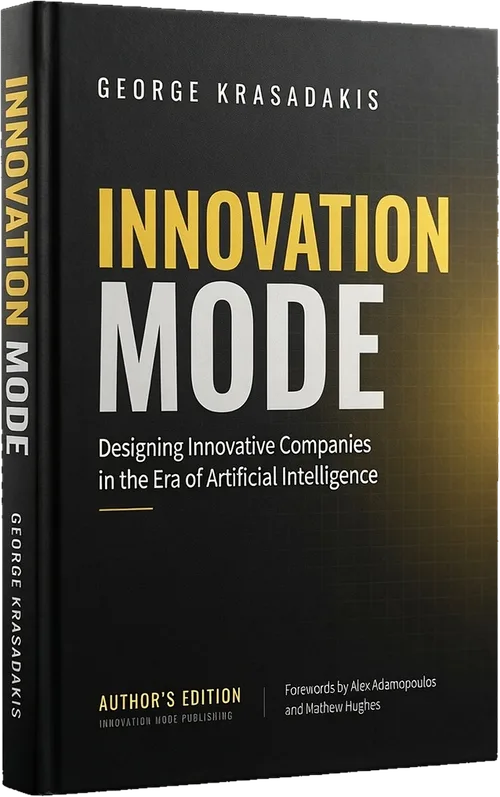
The methodology behind this template. The Problem Statement Template is based on the problem framing framework in Innovation Mode, the complete practitioner’s guide to building innovation capability. The book provides the diagnostic tools (the 6 Innovation Deficits, the Innovation Maturity Index) and 70+ interventions. The templates provide the daily execution layer. 434 pages. Innovation Mode Publishing, Author’s Edition, 2026. By George Krasadakis.
In the toolkit this document is the Problem Framing template, with its printable canvas.
€249 one-time · perpetual licence for one organisation · instant download · free for students and educators

A printable A4 sheet for framing a problem worth solving in a workshop: current state, impact, root cause and dot voting. CC BY-SA 4.0.
Download the PDF
Most startup post-mortems blame money, timing, or competition. But the real killer is building something nobody wants - and it's entirely preventable. This article introduces the three types of unknowns every startup idea carries (risks, uncertainties, and silent assumptions), explains why most validation methods fail, and describes the Innovation Mode approach to systematic idea validation - from the Nine-Dimension Idea Assessment Model to the discipline of knowing when to stop validating and start building.

AI products break every assumption traditional PRDs are built on. From probabilistic outputs to autonomous agents, here's why your product specification needs surgery - and what 25 years of AI patents taught me about fixing it.
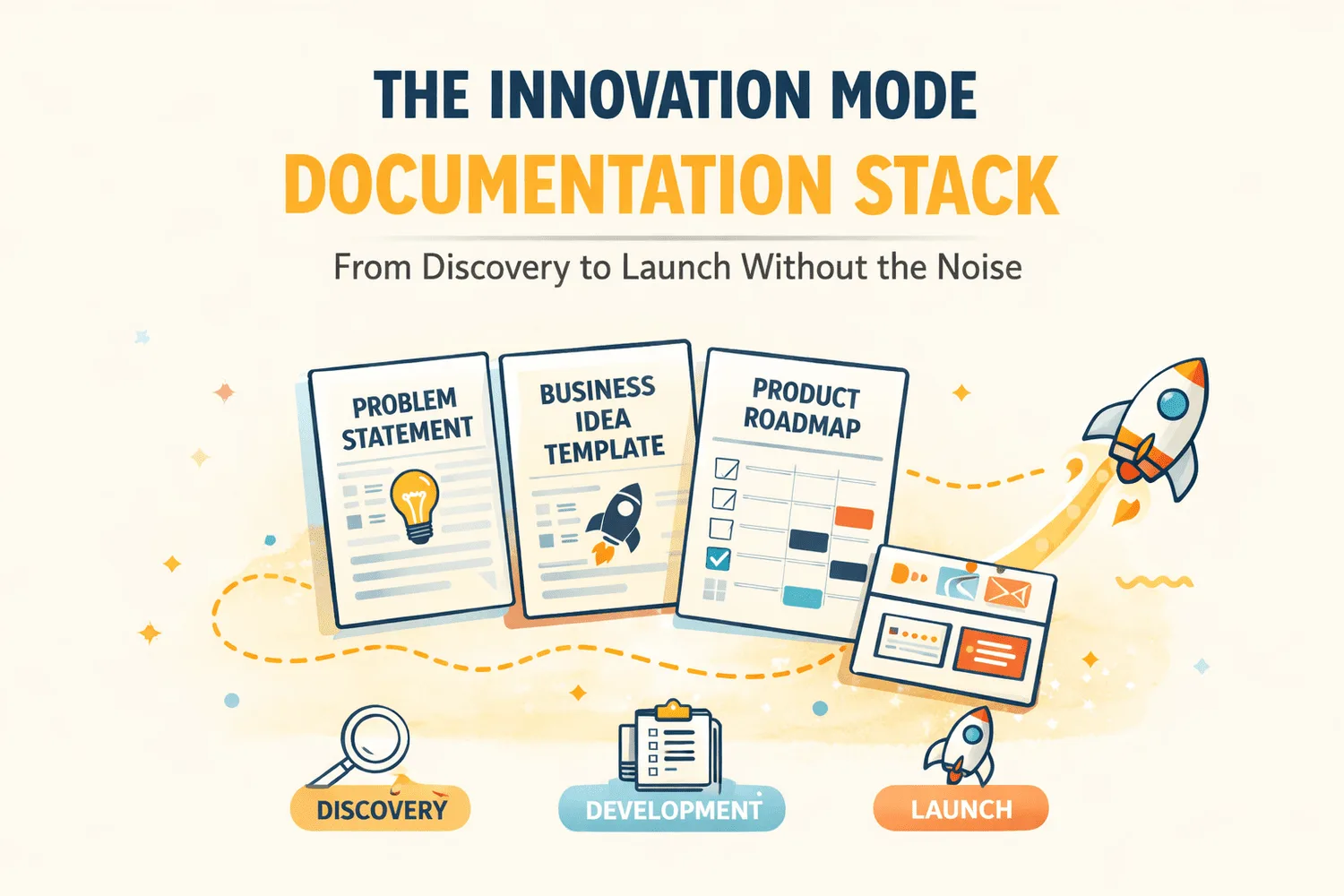
In a world where AI can generate endless content in seconds, clarity has become the ultimate competitive advantage. This guide shows Chief Innovation Officers and innovation teams how to implement lean, just-enough documentation that captures what matters (one-page problem statements, business idea templates, and structured assessments) without bureaucratic overhead. Learn The Innovation Mode documentation stack that progresses from discovery (problem framing, idea validation) through development (PRDs, pitch decks), ensuring your best product innovation ideas survive the journey from concept to launch.