
The Product Concept Template
A holistic framework for articulating your product vision, from market context and user personas to technology stack, go-to-market strategy, and monetisation model. Bridge the gap between a validated idea and a development-ready brief.
Perpetual licence · Free for students · Includes all 8 templates
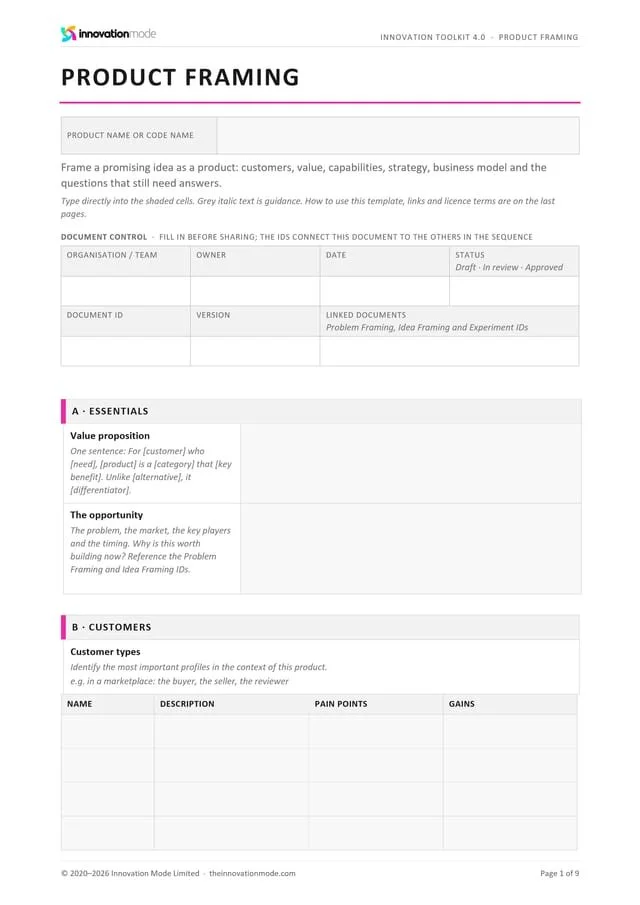
What Is a Product Concept Document?
A product concept document is a structured format that captures the complete vision for a new product: the market context, competitive landscape, target users, value proposition, form factors, technology approach, go-to-market strategy, monetisation model, and open questions. It bridges the gap between a validated business idea and a development-ready brief, ensuring all stakeholders are aligned on what is being built and why before resources are committed.
Good Ideas Die Between Ideation and Execution
Product ideas get lost in scattered presentations, disconnected documents, and backlog tickets that capture features but not vision. Without a single, comprehensive product concept document, teams build different mental models of the same product, leading to scope creep, misaligned priorities, and products that launch without a coherent market story.
The Product Concept Template solves this by providing a structured, fillable format that covers every critical dimension of an early-stage product, from the MVP definition to the growth hypothesis. It creates a single source of truth that product managers, engineers, designers, and executives can all reference. It is the bridge between innovation outputs (ideas, validated experiments) and product engineering inputs (PRDs, technical specs, sprint plans).
Created by George Krasadakis and based on the product definition methodology in Innovation Mode, this template is one of the core frameworks used in innovation advisory and AI strategy engagements with global companies. It naturally follows the Business Idea stage and feeds directly into business experiments and product engineering, the final stage of the innovation lifecycle before development begins.
Six Dimensions of a Complete Product Concept
The template guides product managers and innovators through six complementary sections, ensuring every aspect of the product vision is captured before development begins.
Context
Give the product concept a meaningful title, then describe the problem, key market players, competitive landscape, and conditions that justify this product’s development. Establishes the why and the market opportunity.
Users & Needs
Identify target users, roles, and personas along with their most pressing needs. Define the top Epic user stories: providing a high-level summary of the value the product will deliver. Establishes the who and the value.
Form Factors
Envision the product’s look and feel: mobile app, web platform, API, wearable device, VR/AR experience, or hybrid. Consider the primary and secondary interfaces users will interact with. Establishes the shape.
Strategy & Execution
Outline the go-to-market strategy, growth plan, and implementation roadmap. Describe the technology stack, key dependencies, build-vs-buy decisions, and the phased delivery approach. Establishes the how and the when.
Monetisation & Growth
Define the revenue model, pricing strategy, growth hypothesis, and key business assumptions. How will the product generate value and scale over time? Establishes the business case.
Open Questions
List remaining uncertainties, risks, and open questions that need resolution through business experiments, user research, or technical spikes. Encourages collaboration and iteration. Establishes the risk landscape.
The Template in Action: Four Product Concepts
Each example demonstrates how the six-section framework transforms a validated business idea into a comprehensive product concept document: ready for stakeholder alignment, resource allocation, and development planning.
An AI-Powered Clinical Trial Matching Platform
A Predictive Energy Management System for Commercial Buildings
A Skills-Based Internal Talent Marketplace for Enterprises
A Real-Time Carbon Footprint Tracker for Consumer Brands
Hypothetical product concepts written to illustrate how the six-section framework applies across industries, not based on any specific company or engagement.
Notice how each product concept goes far beyond the initial business idea, it defines the market context, articulates specific user personas with Epic user stories, specifies the technology approach and MVP scope, and lays out a monetisation model with a testable growth hypothesis. This is the level of definition needed before committing development resources. Open questions become the basis for business experiments that validate critical assumptions.
From Validated Idea to Development-Ready Product Concept
The Product Concept Template is used after an idea has been validated through the IM-9 Idea Assessment Model. A typical workflow:
Start from a validated idea. The best product concepts build on ideas that have already been described, evaluated, and selected, not on raw brainstorming output.
Define all six dimensions. Work through context, users, form factors, strategy, monetisation, and open questions. Involve cross-functional stakeholders: product, engineering, design, and business.
Plan experiments for the unknowns. Use the Open Questions section to design business experiments that validate your riskiest assumptions before full development begins.
The Product Concept Template becomes the single source of truth for everyone involved, from the MVP definition through to launch. When combined with the Problem Statement and Business Idea templates, it creates a complete documentation trail from challenge identification to product definition. Once approved, it becomes the input for product engineering, informing PRDs, technical specs, and sprint planning.
About the Product Concept Template
Common questions on product concept documentation, drawn from practitioner experience and the methodology in Innovation Mode.
What is a product concept document?
Why do product teams need a product concept template?
What are the six sections of the Product Concept Template?
How is a product concept different from a PRD (Product Requirements Document)?
What is the difference between a business idea and a product concept?
How does the Product Concept Template fit into the innovation lifecycle?
Can you give examples of product concept documents?
The Final Stage Before Development
The Product Concept is the culmination of the innovation process, where validated ideas become development-ready product definitions. Each stage builds on the one before.
Download the Product Concept Template
The Product Concept Template is included in the Innovation Toolkit 4.0 as both an editable MS Word document and a printable PDF, alongside seven other templates covering the full innovation lifecycle.
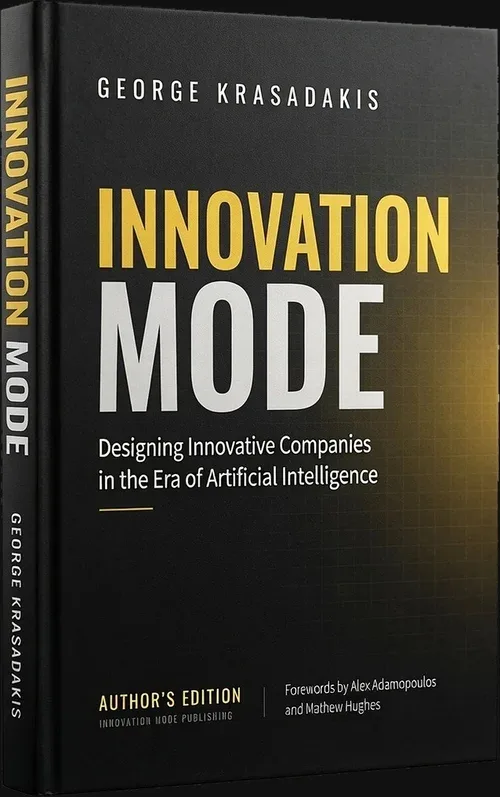
The methodology behind this template. The Product Concept Template is based on the product definition framework in Innovation Mode, the complete practitioner’s guide to building innovation capability. The book covers the end-to-end innovation process from the 6 Innovation Deficits diagnostic through 70+ interventions to product launch. 434 pages. Innovation Mode Publishing, 2026. By George Krasadakis.
The templates, and the worked case that shows them in use.
- Eight editable templates: five Word documents, two PowerPoint canvases and the IM-9 Excel workbook.
- The worked case: nine sample documents carrying one problem from brief to decision, with the reasoning in the margins.
- Quick Start Guide: 17 slides on the documents, the flow and daily practice.
- AI companion: Markdown versions of the templates and 20 prompts, for any AI assistant.
In the toolkit this document is the Product Framing template.
€249 one-time · perpetual licence for one organisation · instant download · free for students and educators
On Ainna.ai: turning a concept into a PRD.

Field notes on this subject
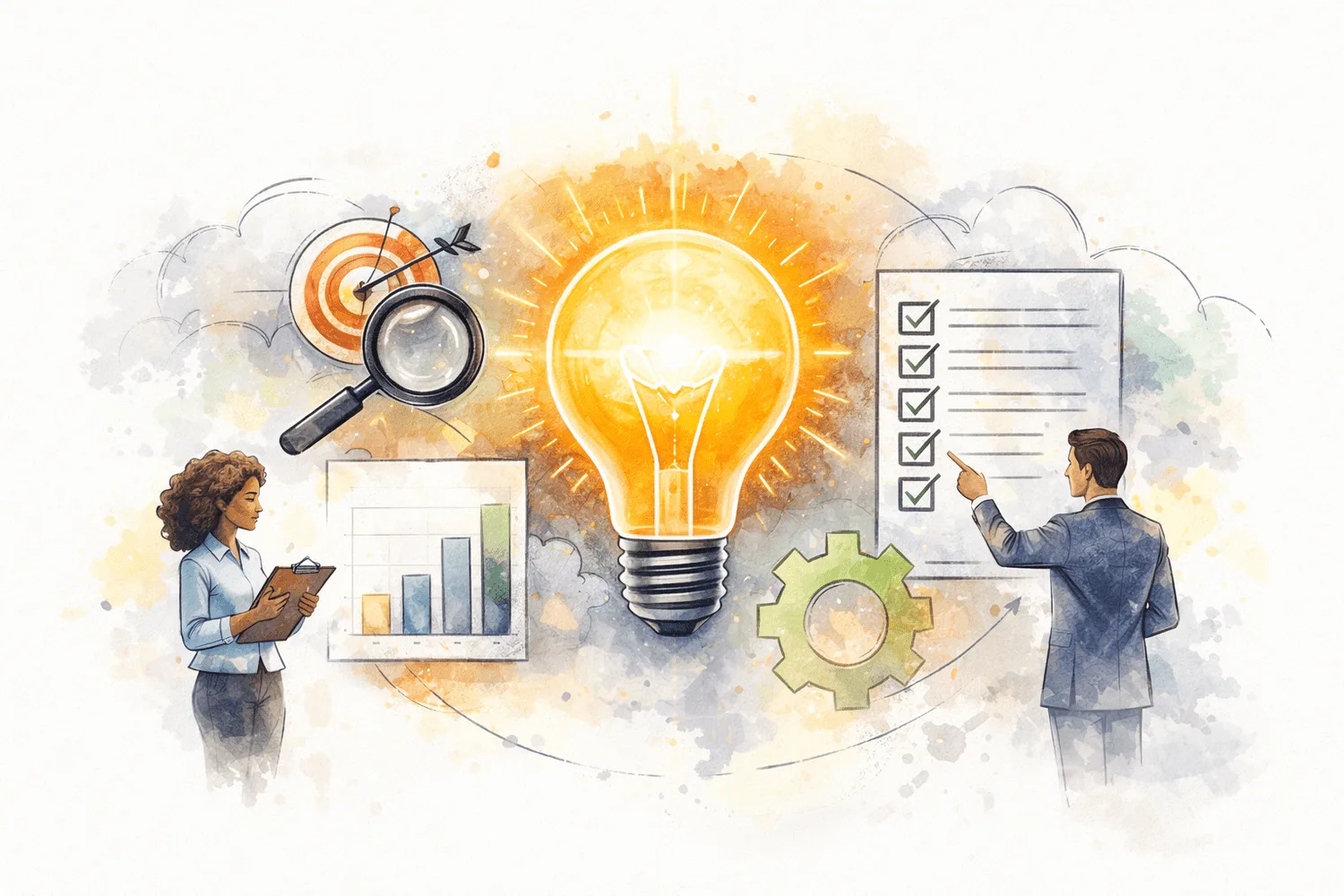
Your Startup Idea Has Three Types of Unknowns. You're Probably Only Testing One.
Most startup post-mortems blame money, timing, or competition. But the real killer is building something nobody wants - and it's entirely preventable. This article introduces the three types of unknowns every startup idea carries (risks, uncertainties, and silent assumptions), explains why most validation methods fail, and describes the Innovation Mode approach to systematic idea validation - from the Nine-Dimension Idea Assessment Model to the discipline of knowing when to stop validating and start building.
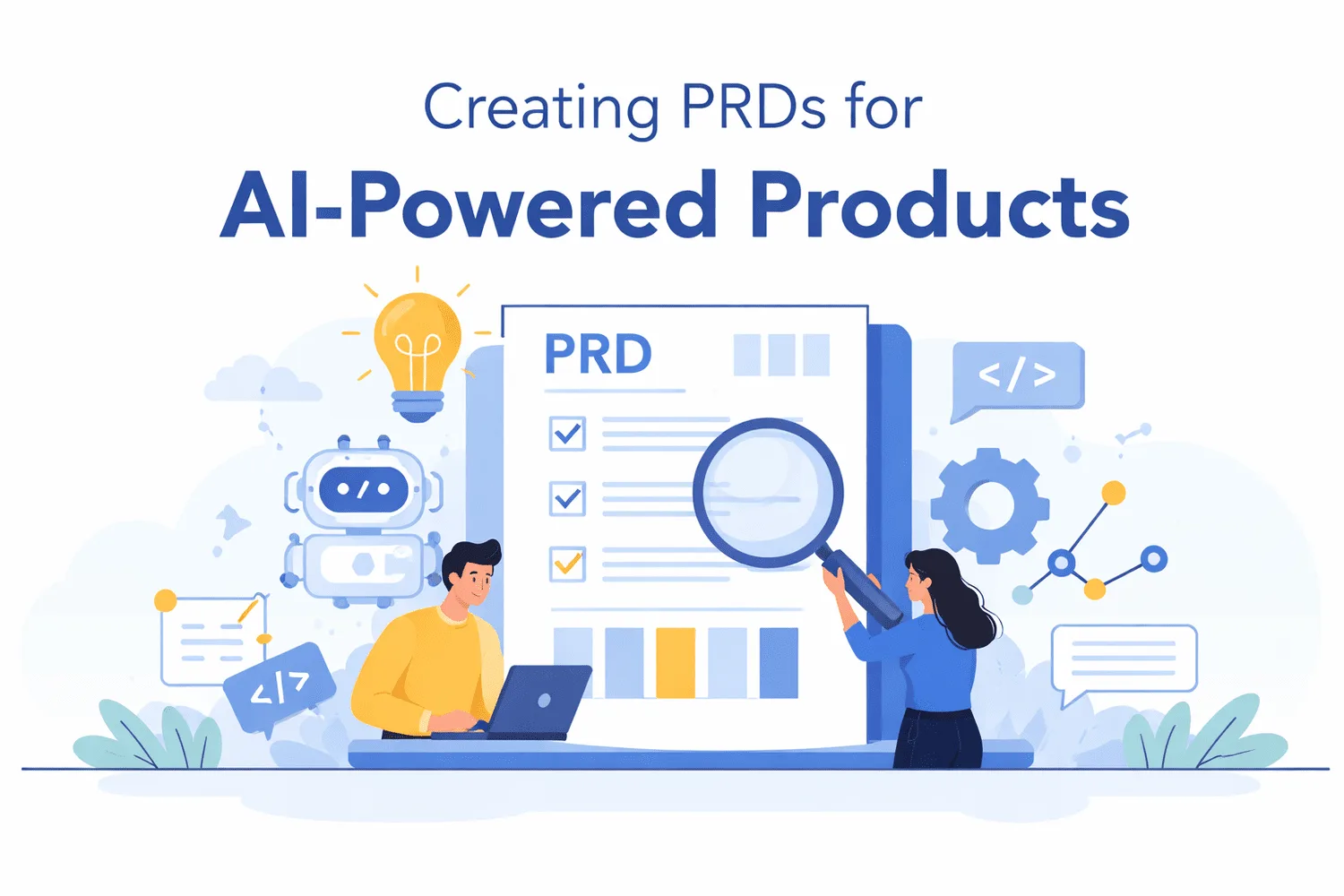
From Deterministic to Probabilistic: Rethinking Product Requirements for the AI Era
AI products break every assumption traditional PRDs are built on. From probabilistic outputs to autonomous agents, here's why your product specification needs surgery - and what 25 years of AI patents taught me about fixing it.
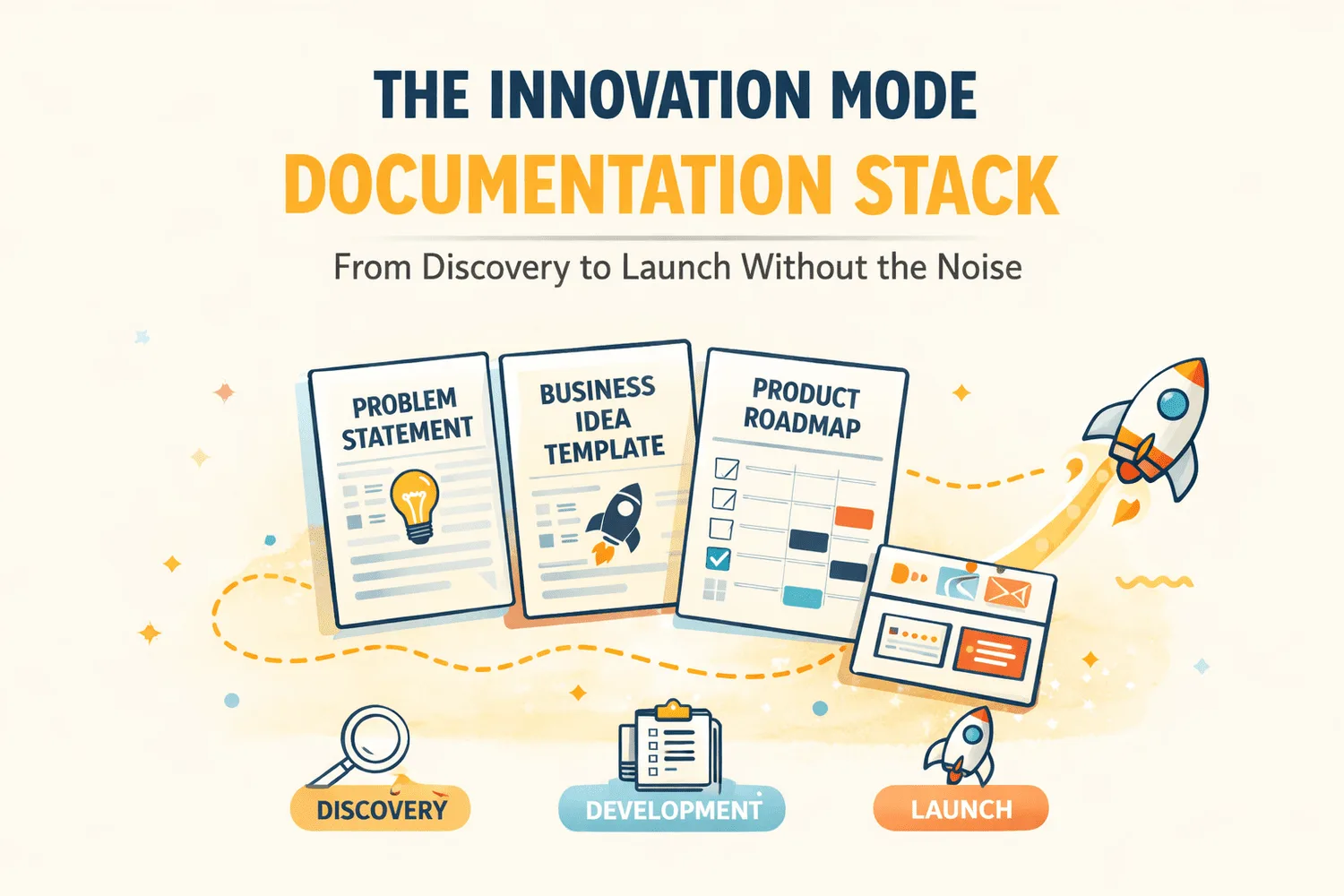
Product Discovery Documentation: The Chief Innovation Officer's Guide to Turning Ideas into Products
In a world where AI can generate endless content in seconds, clarity has become the ultimate competitive advantage. This guide shows Chief Innovation Officers and innovation teams how to implement lean, just-enough documentation that captures what matters (one-page problem statements, business idea templates, and structured assessments) without bureaucratic overhead. Learn The Innovation Mode documentation stack that progresses from discovery (problem framing, idea validation) through development (PRDs, pitch decks), ensuring your best product innovation ideas survive the journey from concept to launch.