
Run hackathons that end in decisions, not demos.
Your hackathon designed with us from end to end, or a programme across many: the brief, the judging, the communications and the funding path after demo day.

Hackathons from every angle: participant, winner, organiser and sponsor. Series organised at Microsoft and Accenture. Author of the method in Innovation Mode.
- For
- Innovation, culture and engineering leaders who want a hackathon to produce opportunities the business can fund.
- Objective
- A clear objective, a judging protocol that holds and a funded path for the winners, agreed before the event begins.
- Structure
- An advisor alongside your team through the five phases, from Design Time to the debrief. Remote, hybrid or in person.
Most corporate hackathons are theatre
Energy peaks, winners are announced, and nothing ships. When hackathons aim for the announcement rather than real outcomes, people eventually recognise them as events that consume budget and goodwill while producing nothing the organisation can fund or build on. The difference is design: a clear objective, a judging protocol that holds, and a path for the winners agreed before the event begins.
| Instead of | A programme delivers |
|---|---|
| A generic theme like “AI” or “innovation” | A theme anchored to a real business priority, with a sponsor |
| Winners chosen by popularity vote | Expert panels scoring eight weighted criteria |
| Engineers, and few others | Cross-functional teams, with non-technical innovators welcomed |
| A trophy for the winners, then nothing | A funded path for winning concepts, agreed before kick-off |
| Attendance counted as success | Nine success criteria, tracked for 12 to 18 months |
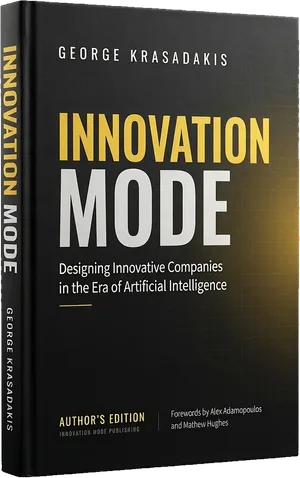
From a leadership standpoint, hackathons are expensive, serious business events that must be planned accordingly.Innovation Mode
One event, or a programme
Both run on the hackathon method in Innovation Mode: the five phases, the design decisions, the judging protocol and the measurement framework. Start with a call, or ask for a proposal.
- 30 minutes
Discovery call
FreeYour event or programme, its objective and timing, and which way of working fits. No preparation needed.
Arrange a call → - One event
The Masterclass, Live
Priced on proposalYour hackathon designed with us from end to end: a discovery call and questionnaire, a plan refined with you, a calibration session with your judging panel and a debrief after the event.
Request a proposal → - Many events
Programmes at Scale
Priced on proposalFor hackathons as a capability: multi-event and multi-region programmes, train-the-trainer, custom rubrics and themes, judging and chairing, and a permanent operating model.
Request a proposal →
Where we work with your team
A corporate hackathon runs in five phases, from the decision to host to the funding of the winners. How to Plan and Run a Corporate Hackathon sets out each one; this is where the advisor comes in.
- Design TimeThe plan: a discovery call and a structured questionnaire, then a working plan refined with you: theme and sponsor, format and eligibility, minimum deliverable, judging rubric and the funding pathway for the winnersOutputYour hackathon plan
- Lead Time · 2 to 6 weeksThe call to innovate: your team announces and promotes the event, with the communications library and the pre-read deck from the MasterclassOutputCommunications ready to send
- Runtime · 1 to 5 daysThe contest: your team runs it on the run-of-show in the plan; for programmes at scale, we can also judge and chairOutputA run-of-show your team owns
- Pitch TimeThe judging: a 60 to 90 minute calibration session before the event, so every judge applies the rubric the same wayOutputA calibrated panel and a defensible ranking
- After the eventThe follow-through: the outcomes, how to track them over 12 to 18 months with the nine criteria in Measuring Hackathon Success, and what to change next timeOutputDebrief and measurement plan
Optional: an independent chair of judges. We run the calibration, uphold the protocol and chair the deliberation. Your leaders decide; we guarantee the process. Also included: the full Hackathon Masterclass at launch, and three months of Ainna.ai Pro for theme generation, idea screening and submission scoring.
Led by the author of the method
George has experienced corporate hackathons from every angle: as a participant and winner, an organiser, a sponsor and a strategic planner shaping innovation programmes at Microsoft, Accenture and high-growth startups. He has organised series of hackathons at companies including Microsoft and Accenture, and set out the method in Chapter 5 of Innovation Mode.
- AuthorInnovation Mode (Author’s Edition, 2026) and the original The Innovation Mode (Springer, 2020)
- Inventor18 patent families covering AI-powered ideation and voice-driven brainstorming agents
- TodayArchitect of Ainna Enterprise, the agentic innovation platform for organisations
Questions about the programmes
What does a corporate hackathon programme include?
How much does it cost?
How far ahead should we start?
Can you judge or chair our hackathon?
What happens after demo day?
Can we run it ourselves instead?
A hackathon that ends in decisions
Choose a starting point and tell us about your event. It takes about two minutes.
Building more than events? Corporate Innovation Advisory rebuilds the innovation function around them, in eight weeks. Prefer to run it yourself? The Hackathon Masterclass gives your team the method and every template.
Latest insights on hackathons and design sprints
Planning a Corporate Hackathon? 50+ Ideas That Actually Work
Most hackathon idea lists are useless - "build a chatbot" helps no one. These 50+ themes are framed around real business problems, organized by innovation type, and designed to attract diverse teams - not just developers. Plus: how AI has made hackathons more inclusive than ever.

Should We Still Organize Corporate Hackathons in the AI Era?
AI can generate ideas in seconds - so are corporate hackathons still relevant? More than ever. But the old annual model is broken. Here's why innovation leaders should run hackathons more frequently, how AI tools make them radically more inclusive, and what it takes to turn hackathon concepts into real products.
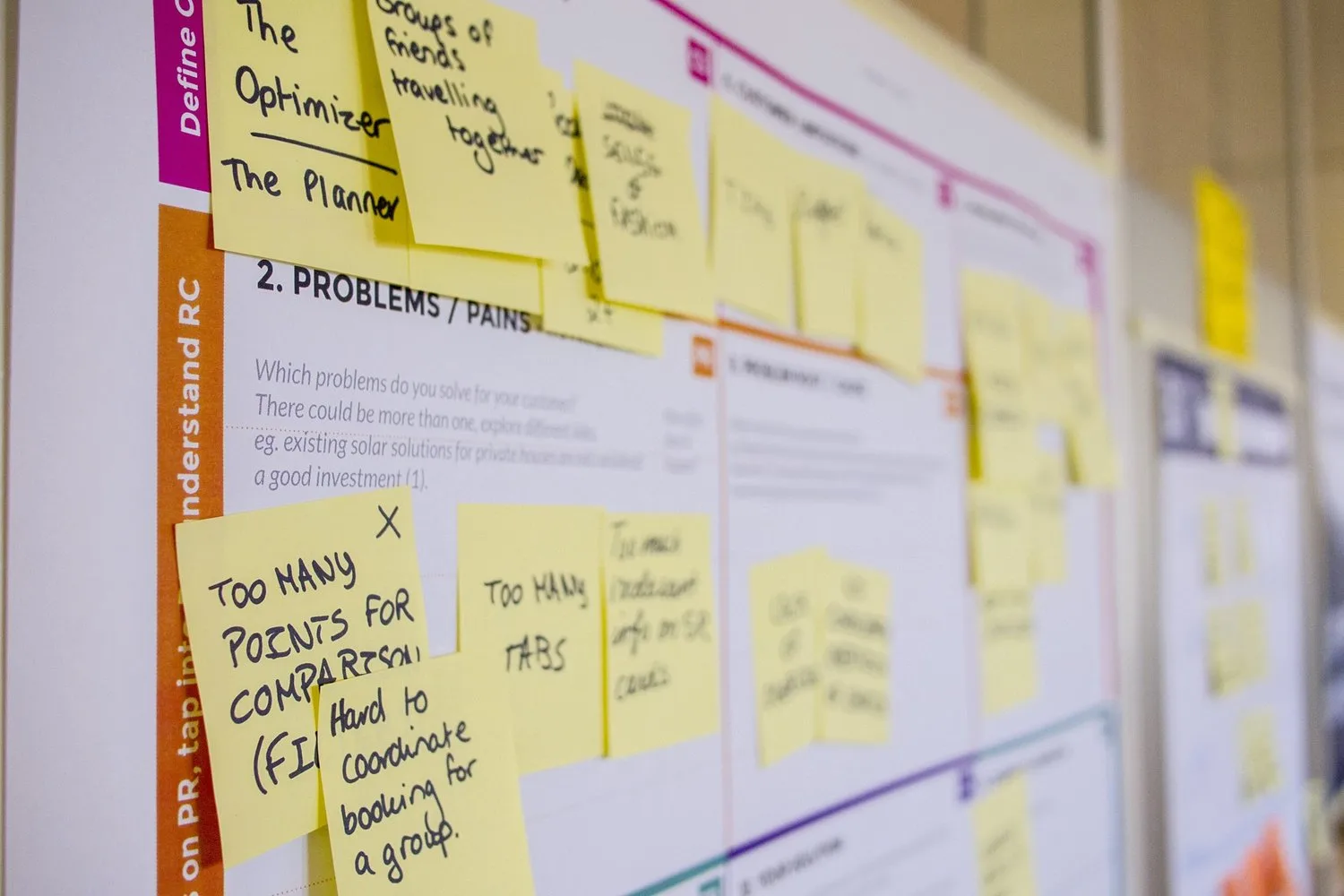
Running a Design Sprint: How To Ensure Success
Design Sprints can generate remarkable output for your company, such as a backlog of impactful ideas (also with IP opportunities), functional prototypes, learnings, and key insights from customers along with real business opportunities. At the same time, they can lead to significant cultural improvements towards the ‘innovation mode’. But …